

For the majority of 2025, producers, traders and buyers of green coffee have suffered collective whiplash due to radical policy changes affecting the global coffee trade, amid enduring threats such as climate change.
U.S. tariffs on goods from nearly all major coffee-producing countries and Europe’s looming anti-deforestation law (EUDR) led the list of policy influences, yet it’s important to remember that the year started with the shocking decision under the Trump administration to halt USAID funding, a critical source for coffee sustainability programming.
This type of political instability in consuming markets has, by and large, dealt a painful body blow to capacity-building work throughout the coffee lands, where despite historically high commodity prices, millions of smallholder farmers continue to live at or below established poverty lines.
Much of 2025 felt like an unfortunate political detour from the real work the global coffee industry cannot keep postponing: making green coffee production more resilient and genuinely sustainable in the face of climate change and rising demand.
Daily Coffee News’ 2025 Year in Review is our annual look back at the people, places and ideas that shaped coffee this year. Read the full series.
Sustainability and Opinions
Reflections on 1 Million Coffee Farmers Trained with TechnoServe Coffee Head Paul Stewart, Part 2
Paul Stewart has been navigating both the bureaucratic terrain and the actual coffee lands through numerous roles over the past 23 years. In part one of this series, Stewart addressed questions related to program development, and part two will get into the poverty paradox within the coffee sector, as well as the rapidly evolving, and turbulent, international development landscape… read more
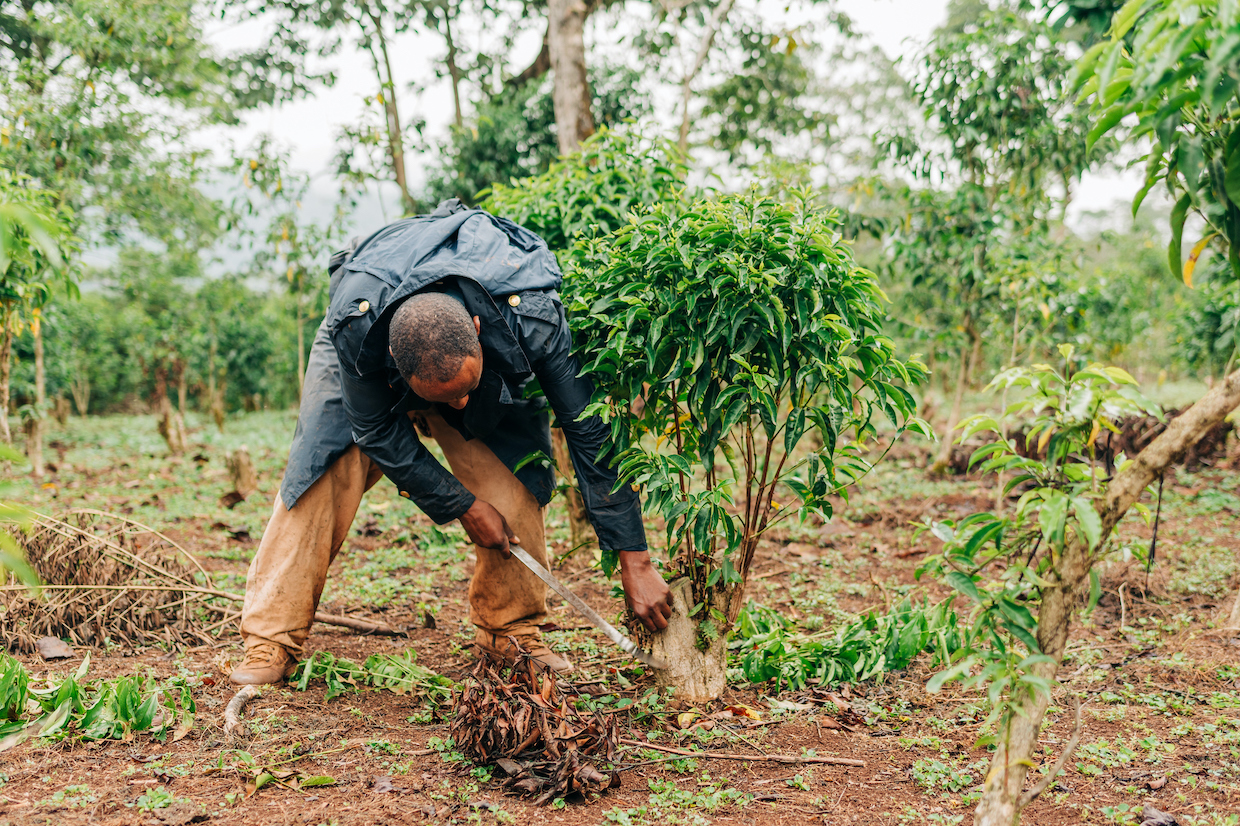
TechnoServe courtesy photo by Olivia Sakai. Used with permission.
Column: What the 2025 Brazil Coffee Harvest Can Teach Us About the Future
Another year has passed for coffee in Brazil, and the 2025 crop is now virtually 100% picked, in storage and ready for commercialization. I’d like to take this opportunity to share some observations about the 2025 and 2026 crops, based on many first-hand visits to coffee fields in Minas Gerais and São Paulo, and from hours of conversations with technicians, farmers, researchers, warehouse owners and agronomists throughout the Brazilian coffeelands… read more
Report Says Coffee Continues to Erase Brazil’s Forests, Exacerbating Climate Shocks
A new report from the nonprofit Coffee Watch says that modern coffee production in Brazil continues to be a significant driver of deforestation, with hundreds of thousands of hectares of native forest cleared inside coffee farm boundaries since 2001. Beyond the global implications for biodiversity and climate change, the continued loss of forest in key coffee regions presents economic threats to the Brazilian coffee sector, driving a cycle of drought and yield volatility, according to the report… read more
Rainforest Alliance Launching Regenerative Agriculture Certification for Coffee
Rainforest Alliance just announced the launch of a new standard and certification for regenerative agriculture in coffee, with a distinct “regenerative” seal expected to land on consumer coffee bags in 2026. The organization, which reduced requirements for its core sustainable agriculture certification earlier this year, said the new regenerative agriculture add-on is designed to give farmers and buyers a science-based pathway to achieve positive outcomes in soil health, biodiversity, water stewardship, climate resilience and livelihoods… read more
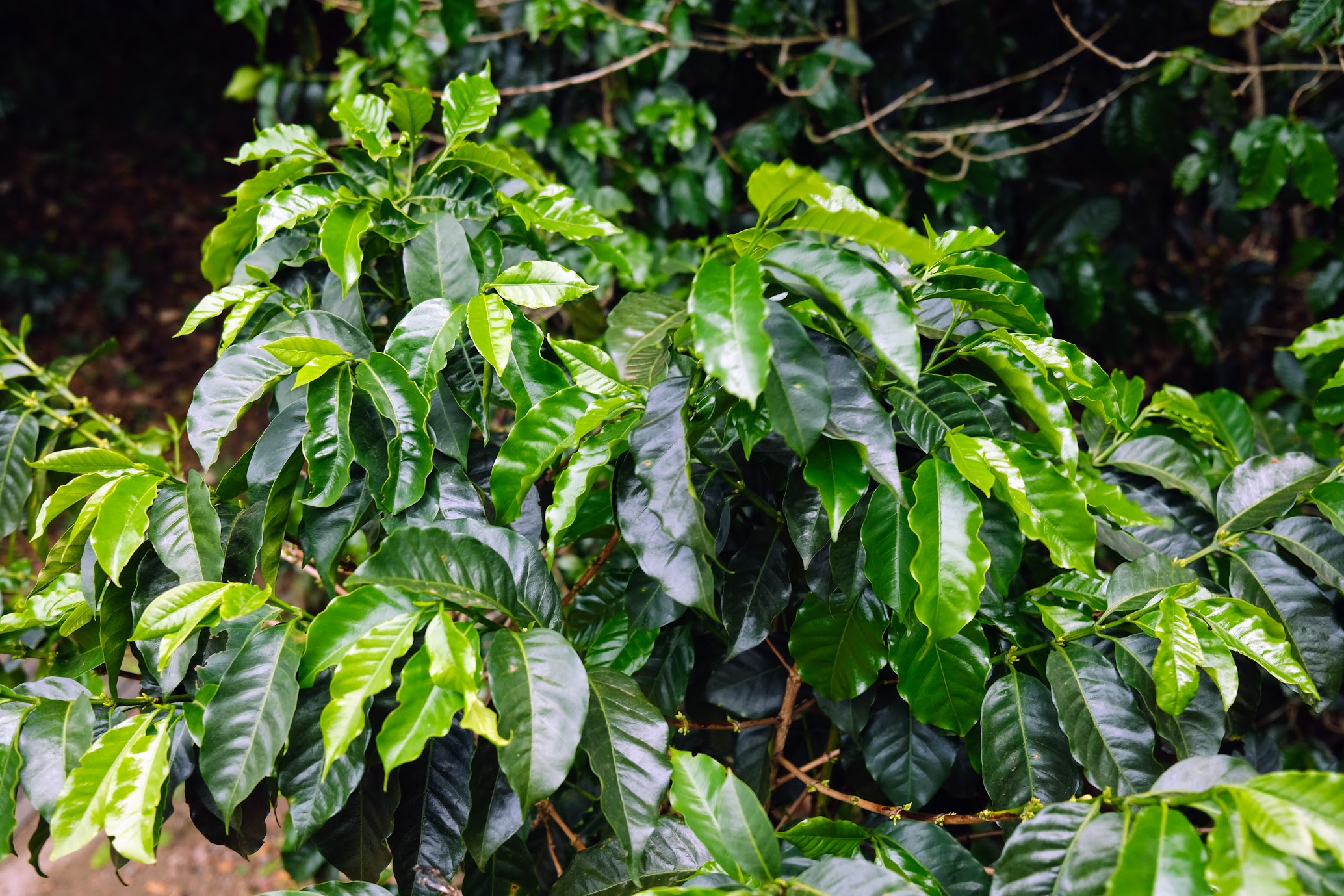
Daily Coffee News photo by Nick Brown.
Like an Earthquake Inside of a Hurricane: How Tariffs May Compound Coffee’s Climate Woes
Eight years ago, when Debbie Wei Mullin founded her company Copper Cow, she wanted to bring Vietnamese coffee into the mainstream. Vietnam, the world’s second-largest exporter of coffee, is known for growing robusta beans. Earthier and more bitter than the arabica beans grown in Brazil, Colombia, and other coffee-growing regions near the equator, robusta beans are often thought of as producing lower-quality coffee… read more
Column: With EUDR and Beyond, the Information Gap Must Be Narrowed
Coffee is about sharing with people — sharing moments, friendships and stories. I’d like to share the story of a sustainability project in which information was shared among more than 4,000 smallholder farmers, 100 cooperatives and other stakeholders in over 10 countries. Although the project was focused on the effects that the new European deforestation-free regulation, known as EUDR, might have on African producers, its findings remain relevant for a much broader base… read more
Column: What is the Formula for Sustainability in Coffee Production?
What is the best production model that combines good agricultural practices, low environmental impact and high productivity? Just as important, is this model accessible and applicable to all types of coffee producers? When it comes to sustainable agriculture, especially in coffee, we often have many more of these types of questions than we have answers… read more
Coffee Farmers in Laos Say Agroforestry Requires More Than Mere Advice
Laos has experienced extreme weather in recent years and agroforestry, an age-old method of growing coffee under the shade of trees, is being promoted as a sustainable lifeline. However, without better support systems — especially fair pricing mechanisms — many farmers are hesitant to adopt the practice. In the cool highlands of southern Laos, the smell of freshly roasted beans drifts through coffee plantations that stretch across volcanic soil. But behind the brewing lies a tougher story… read more
Farm Africa Outlines Model for Boosting Farmer Incomes While Curbing Deforestation
The last decade has seen a growing pile of evidence suggesting that coffee grown in agroforestry systems has the potential for numerous environmental and economic benefits over coffee grown on large swaths of deforested, chemical-doused land. The latest piece comes from the heart of the wild coffee forests, following a multiyear forest conservation and coffee development project led by the NGO Farm Africa in Ethiopia… read more
Photo courtesy of Farm Africa.
A Closer Look at Value Distribution in Specialty Coffee Markets
We recently published a study in World Development that shows — using real coffee transaction data — how most of the economic benefits associated with quality improvements are not reaching the people who grow and process green coffees. Instead, our findings indicate that specialty coffee segments are characterized by less equitable revenue distribution than what we see in mainstream coffee markets… read more
SANA is Supporting the Mental Health of Women Coffee Farmers
When Lucia Bawot published We Belong: An Anthology of Colombian Women Coffee Farmers in March 2023, she never imagined it would inspire her to launch SANA, an integrative psychosocial program providing mental health care and wellness for women coffee farmers across Latin America. Bawot had committed to sharing proceeds with the women featured in her book, but simply sending money felt too transactional… read more
Inside Colombia’s Monumental Struggle to Balance Coffee Quality with Climate Adaptation
Climate change is profoundly disrupting coffee production in Colombia, the world’s third-largest coffee producer, after Brazil and Vietnam. The country is also facing extreme weather events from successive cycles of La Niña and El Niño that bring either torrential rains or prolonged droughts. These fluctuations disrupt agricultural cycles and weaken harvests, say researchers, while rising temperatures encourage the proliferation of harmful insects and diseases caused by fungi… read more
Column: Let’s Reject the False Dichotomoy of Aid or Trade
Before the specialty coffee associations of the United States and Europe merged to form SCA, I spent a few years as a volunteer on the SCAA Sustainability Council. I was working at the time for Catholic Relief Services, leading coffee projects in Central and South America. Most of the other members were from the coffee industry, working at traders or roasters. During my first meeting, one of the items on the agenda was a review of submissions for the annual SCAA Sustainability Award. All the finalists were donor-funded projects. I thought that was crazy, and I said so… read more
Daily Coffee News photo by Nick Brown.
Brazil Rescued 200 Coffee Workers from Slave-Like Conditions in 2024
More than one in 10 of the people rescued from what the Brazilian government described as “slave-like” and “degrading” working conditions last year were coffee workers. In total, Brazil’s Ministry of Labor and Employment (MTE) pulled 2,004 people out of slave-like labor conditions following 1,035 site inspections in 2024. Trailing only construction, the coffee sector was found to have the second-highest number of rescued workers (214), according to the agency… read more
Coffee Price Volatility Harms the Mental Health of Farmers
Coffee is a drink that punctuates many of our lives. Millions of us depend on this dark liquid to start the morning, or to break up the day. It has also become quite an expensive habit. But before we baulk at paying £5 for a flat white, it’s worth thinking about the price paid by the coffee farmers who provide its base ingredient… read more
Green Coffee Market and Multi-Stakeholder News
GCP: 75% of Coffee from 11 Major Buyers Meets Some Sustainability Mark
Approximately 75% of the green coffee purchased by 11 of the world’s largest buyers in 2024 met some sort of sustainability standard, according to the latest report from the Global Coffee Platform (GCP). GCP, a Europe-based membership organization supporting pre-competitive sustainability efforts throughout the global coffee industry, has published versions of the sustainable purchasing report on a nearly annual basis since 2018… read more
European Parliament Votes to Delay EUDR
A week after European Union member states adopted a “negotiating mandate” to delay Europe’s new anti-deforestation supply chain law (EUDR), the European Parliament followed suit, voting to push back enforcement another year. In a Nov. 26 vote, the Parliament approved a package of “simplification measures” that includes pushing enforcement of the law to Dec. 30, 2026, for large companies, and June 30, 2027, for small companies… read more

Fairtrade Plans Major Standards Overhaul for Coffee and Other Crops
Fairtrade International is planning a sweeping overhaul of the standards that govern Fairtrade-certified coffee and other crops. The multi-year project will likely reshape how millions of farmers, workers and buyers engage with the system, which is designed to support smallholder farmer livelihoods through ethical consumerism… read more
Specialty Coffee Association of Ethiopia Launches Plans: Best of Ethiopia
Prominent Ethiopian green coffee professionals have come together to launch the Specialty Coffee Association of Ethiopia (SCAE), a new national trade organization designed to “elevate” Ethiopia’s specialty coffee sector and better connect producers with global buyers. In a Nov. 25 announcement, the SCAE said it plans to protect the country’s coffee heritage, improve quality standards and expand market access. Ethiopia is widely recognized as the genetic birthplace of arabica coffee and home to thousands of distinct varieties, yet much of that potential “remains unexplored and undervalued,” the group said… read more
Fairtrade and Bina Desa Lead EU-Funded Smallholder Initiative in Indonesia
Fairtrade International and Indonesian NGO Bina Desa are launching a four-year, €1 million (US$1.15 million) program to help smallholder farmers in Indonesia adapt to climate change, meet new sustainability regulations and improve incomes. DCN has confirmed that the project is focused on the coffee, cocoa, rice and sugar sectors on the islands of Java and Sulawesi… read more
Regenerative Collaboration in Colombia Leads to Biochar Origins Coffee Line
Colombia-based green coffee seller Equation Coffee recently introduced Biochar Origins, a line of coffees resulting from a collective regenerative agriculture initiative. The first coffee from the initiative recently came to market, reflecting an effort that has involved numerous farmers, soil experts and progressive coffee companies to employ biochar derived from coffee plant prunings as a soil amendment… read more

Photo courtesy of Equation.
ICO Unveils Global Database of 400 Coffee Sustainability Projects
As organizations throughout the coffee value chain continue to call for more transparent and collective action for coffee sector sustainability, navigating the complex forest of sustainability initiatives remains a challenge. Late last week, the International Coffee Organization (ICO) unveiled an expansive new map of the trees, compiling hundreds of sustainability initiatives within a slick new filterable and navigable database called the Coffee Sustainability Support Database (C2SD)… read more
Futures.Coffee is a Free Tool for Present Coffee Prices
The coffee “C market” and “passion” are not phrases that typically go hand in hand. Yet for the past six months, a Bay Area couple has been spending nights and weekends readying Futures.Coffee, a free website for quick-reference commodity coffee price info. Created by web developer Tom Schluep and longtime coffee pro Sandra Elisa Loofbourow, Futures.Coffee was designed to give coffee-interested people of all professional levels and backgrounds “a little more insight into the base price that inevitably impacts their daily cup.”… read more
The C Price, as the Coffee Industry Knows It, is Being Phased Out
The New York-based Intercontinental Exchange (ICE), one of the world’s major commodity trading platforms, said it is phasing out the current U.S.-cents-per-pound benchmark for the arabica coffee trade, known as the “C Price.” ICE said yesterday that it was immediately pausing the listing of new contract months, with March 2028 being the final date listed for traditional arabica futures contracts. Coffee serial and weekly options contracts will similarly be phased out, with February 2028 being the final month… read more
TechnoServe Builds a Case for Regenerative Agriculture Investments in Coffee
With research supported by two of the world’s largest coffee companies, the United States-based nonprofit TechnoServe is making a business case for investing in regenerative agriculture in the coffee sector. The large-scale investment appeal arrives amid growing industry buzz surrounding the concept of regenerative agriculture. It also comes as international development organizations face new funding roadblocks… read more
Fairtrade Launches LIRP on Demand to Streamline Living Income Price Discovery
Global nonprofit Fairtrade International is now offering “LIRP on Demand,” a tailored service designed to help coffee companies identify living income reference prices (LIRPs) for farmers in their supply chains. The Bonn, Germany-based group, which has member organizations all over the world, described the service as a natural extension of its existing LIRP processes and methodology, which has resulted in seven country-wide LIRPs for coffee… read more

FAO Report Cites Climate as Driver of Price Volatility, Calls for Transparency
A new report by the United Nations Food and Agriculture Organization (FAO) highlights how climate change is exacerbating price volatility, while calling for increased transparency and information-sharing among market participants. The FAO analysis comes against the backdrop of a period of record-high prices (not adjusted for inflation) for green arabica and robusta coffees. Yet it also comes a few short years after prices were at multi-year lows, dipping below $1 per pound and threatening the livelihoods of millions of the world’s smallholder coffee farmers… read more



Comment