


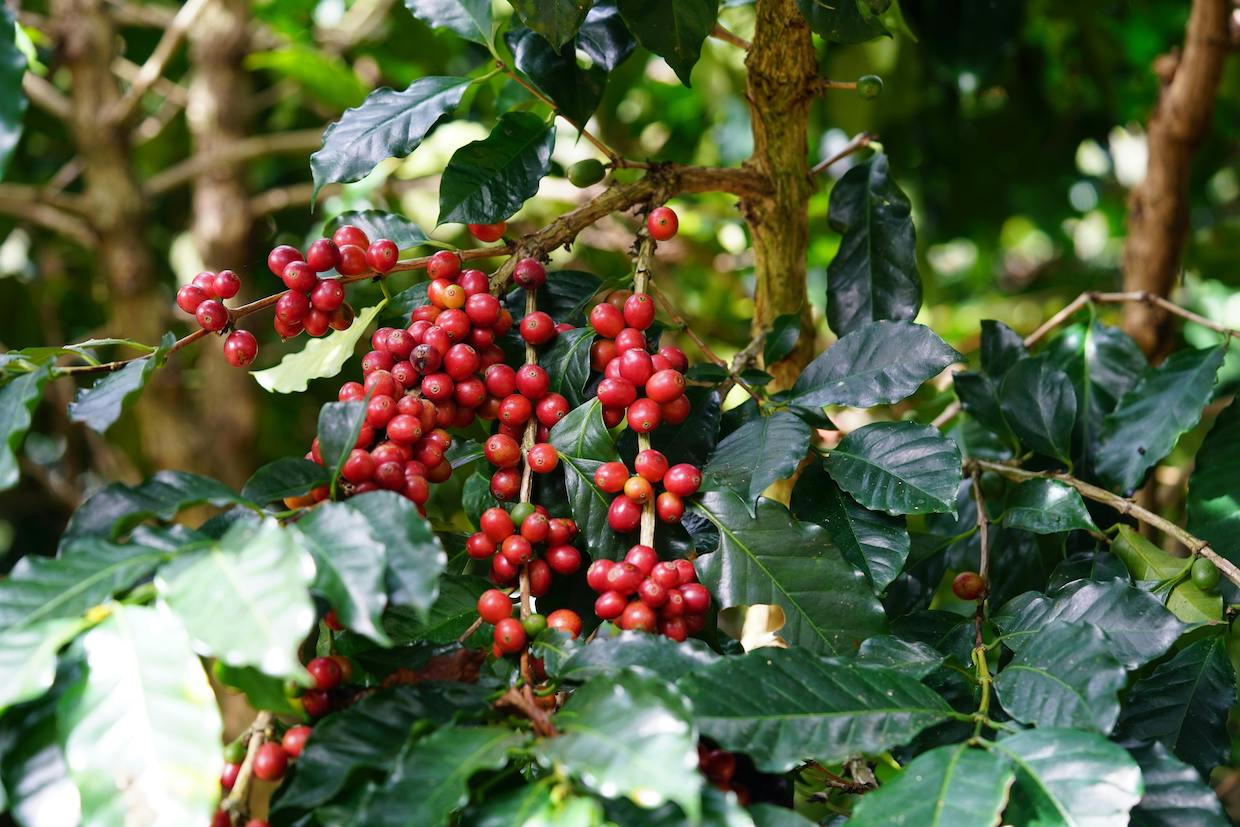
Daily Coffee News photo by Nick Brown.
Approximately 75% of the green coffee purchased by 11 of the world’s largest buyers in 2024 met some sort of sustainability standard, according to the latest report from the Global Coffee Platform (GCP).
GCP, a Europe-based membership organization supporting pre-competitive sustainability efforts throughout the global coffee industry, has published versions of the sustainable purchasing report on a nearly annual basis since 2018.
Representing about 28.9 million 60-kilo bags of coffee (roughly 1.7 million metric tons), the 75% figure is the highest in the history of the report, following 73% in 2023, 70% in 2022 and 55% in 2021.
However, year-to-year comparisons of “sustainable purchases” are complicated by multiple factors, including which companies submitted purchasing data, which private in-house sustainability schemes GCP formally recognizes as meeting its baseline sustainability reference code, and occasional changes to standards among popular third-party certification schemes.
“The uptake of sustainable coffees is increasing, which is good news,” GCP executive director Annette Pensel wrote in the report. “However, the opportunities at hand are aligned measurement, stronger partnerships and substantial investments to enable and track continuous improvements in more efficient, meaningful ways.”
The Numbers
The 2024 report included voluntary purchasing data from 11 large roasting companies, primarily in the United States and Europe: JDE Peet’s, Julius Meinl, Keurig Dr Pepper, Melitta Group, Mother Parkers, Nestlé, Supracafé, Taylors of Harrogate, Tesco, UCC and Westrock Coffee Company.
Combined, those companies reported approximately 38.4 million 60-kilo bags of coffee from 40 countries of origin, representing about 21% of the green coffee purchased globally in 2024.
By volume, about 24.6% of those purchases were described as “conventional,” whereas the other 75.3% were described as “sustainable.”
Among the total volume (conventional and sustainable), 46.7% of the coffees bore at least one of four third-party certifications: 4C, Fairtrade International, Fair Trade USA or Rainforest Alliance.
Meanwhile, 28.6% were classified as sustainable only through one of 22 recognized in-house sustainability schemes, such as Nespresso’s AAA program, Ofi’s AtSource programs or Ecom’s SMS Verified program.
The largest single schemes by volume were 4C at 694,035 tons, followed by Enveritas Green at 433,709 tons.
GCP is naturally encouraging more coffee companies to join in its purchasing reporting efforts.
“As a coffee community, we must keep evaluating the positive impact our investments and actions have on farmers and the environment,” Pensel said. “Now is the time to enhance collaboration to further align our measurement and investment efforts.”
Comments? Questions? News to share? Contact DCN’s editors here. For all the latest coffee industry news, subscribe to the DCN newsletter.
Related Posts
Nick Brown
Nick Brown is the editor of Daily Coffee News by Roast Magazine.

Comment