


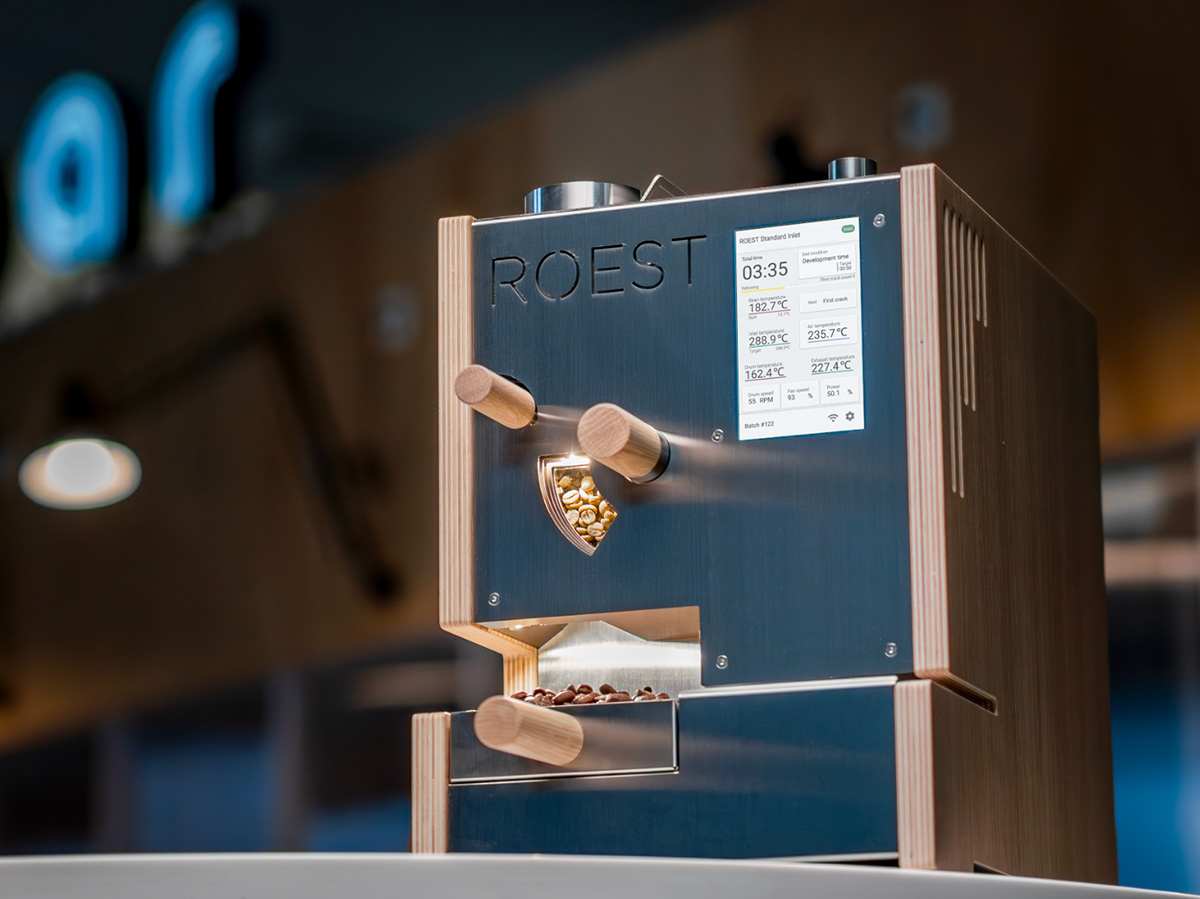
New Roest machines share the same exterior look, but have different internal features. All images courtesy of Roest.
Norwegian electric sample roaster maker Roest launched the next generation of its product line last week. The new models S200 and L200 Plus join the renamed flagship L200 Ultra.
The new machines share the same footprint and aesthetic but are instantly identifiable by their high-resolution touchscreens. All models now include 5 GHz Wi-Fi, connecting to Roest Connect — the company’s roast profiling, automation, management and analysis platform.
New control boards support automatic firmware updates, and expanded storage holds up to 10 roast profiles locally.
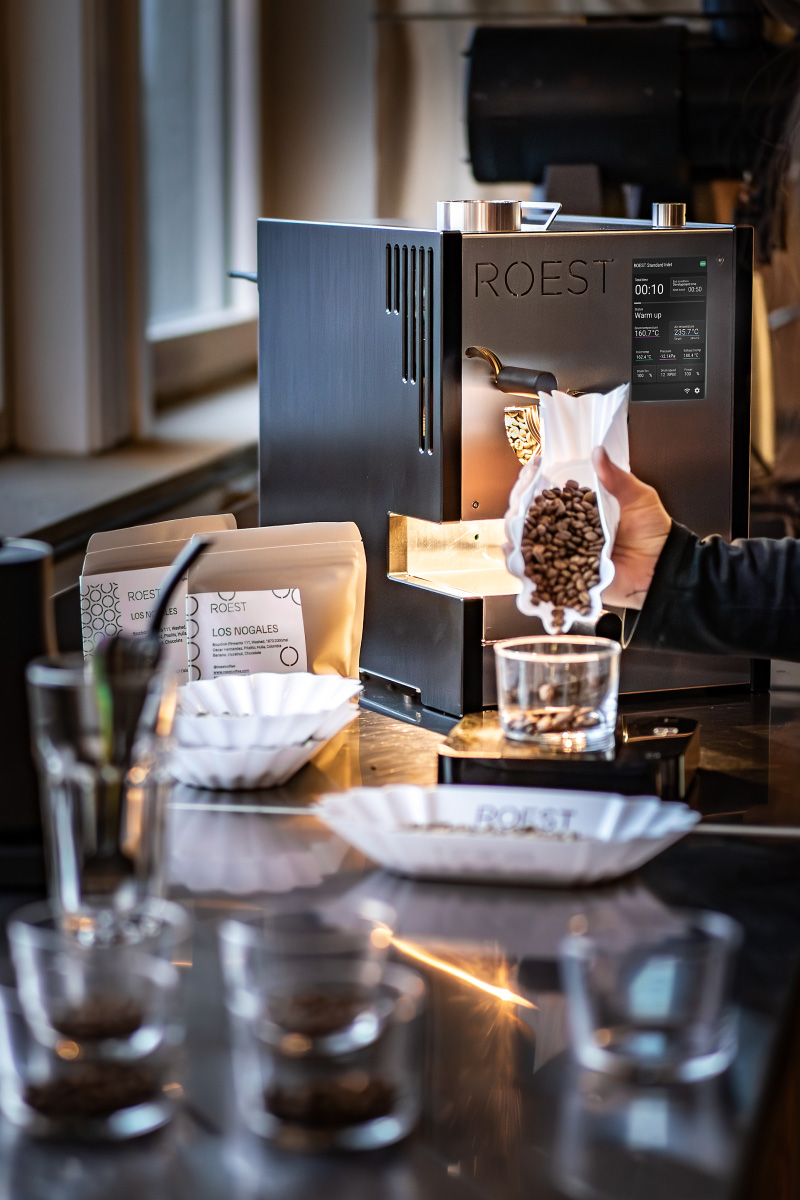
Standard hardware improvements include redesigned heating elements for durability, quieter heater fans and more precise probe placement. The machines ship with 200-gram-capacity hopper extensions and cooling trays.
While the S200 and L200 Plus represent a generational leap within the Roest catalog, the newly named L200 Ultra is the same top-of-the-line machine that soft-launched earlier this year as the L100 Ultra.
“Roest continues to evolve as a hardware-plus-software ecosystem. We’ve established a future-proof platform capable of receiving firmware updates and new features over time,” Roest Head of Marketing Veronika Bolduc told Daily Coffee News. “These [features] represent the jump to ‘200,’ apart from the fact that when we launched ‘100’ models, that was the ideal roasting size per batch. Now it is 200 grams, allowing you to roast reliably anywhere from 50 to 200 grams.”
The entry-level S200 retains Roest’s core bean, air and inlet temperature sensors. The L200 Plus adds exhaust and drum temperature sensors, automated first crack detection and enhanced between-batch and cooling-phase features.
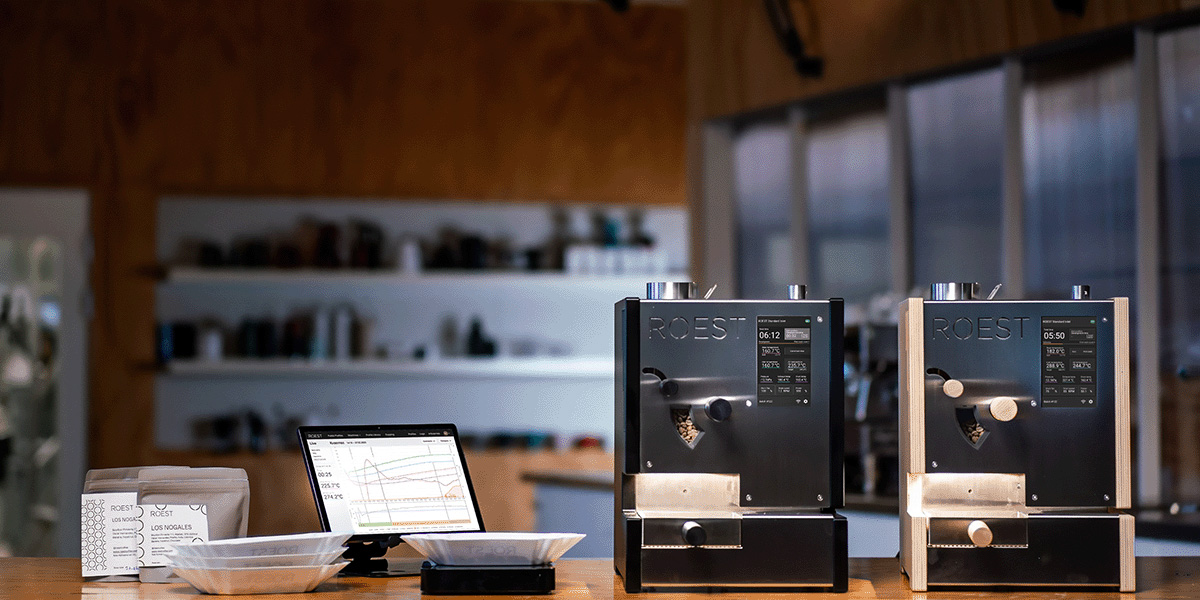
The L200 Ultra includes all of the above, plus a drum air pressure sensor for precise airflow management, dual bean-temperature sensors and a counterflow mode that reverses drum rotation. This corrals beans directly into the hot air stream, letting users roast with less heat to save energy or roast faster — potentially doubling productivity to as much as three kilograms per hour, according to Roest.
The S100 and L100 Plus are no longer in production. The company will continue to support them with parts and service. New parts that enable generation-specific features aren’t retrofittable to older machines, though a trade-in program is available.
Upgrading between new-generation models is easier now. All new models ship with nearly all necessary hardware pre-installed, requiring only a software update to activate new features.
“The S200 and L200 Series build on that same promise of longevity, now with a platform ready for the future,” Bolduc said.

The machines are available to order now for shipping within two weeks. Excluding shipping and import fees, the S200, L200 Plus and L200 Ultra are priced at €5,290 ($6,130 as of this writing), €7,490 ($8,679) and €8,490 ($9,837), respectively.
“After 10 years of innovation, we’ve reached the limits of the original hardware platform,” Bolduc told DCN. “Rather than a retrofit, this is a rebuild from the ground up — made to carry Roest forward for the next decade and beyond.”
Beyond sample roasting, Roest also recently launched its first production roaster, the 3-kilo capacity Roest P3000.
Comments? Questions? News to share? Contact DCN’s editors here. For all the latest coffee industry news, subscribe to the DCN newsletter.
Related Posts
Howard Bryman
Howard Bryman is the associate editor of Daily Coffee News by Roast Magazine. He is based in Portland, Oregon.


Comment