


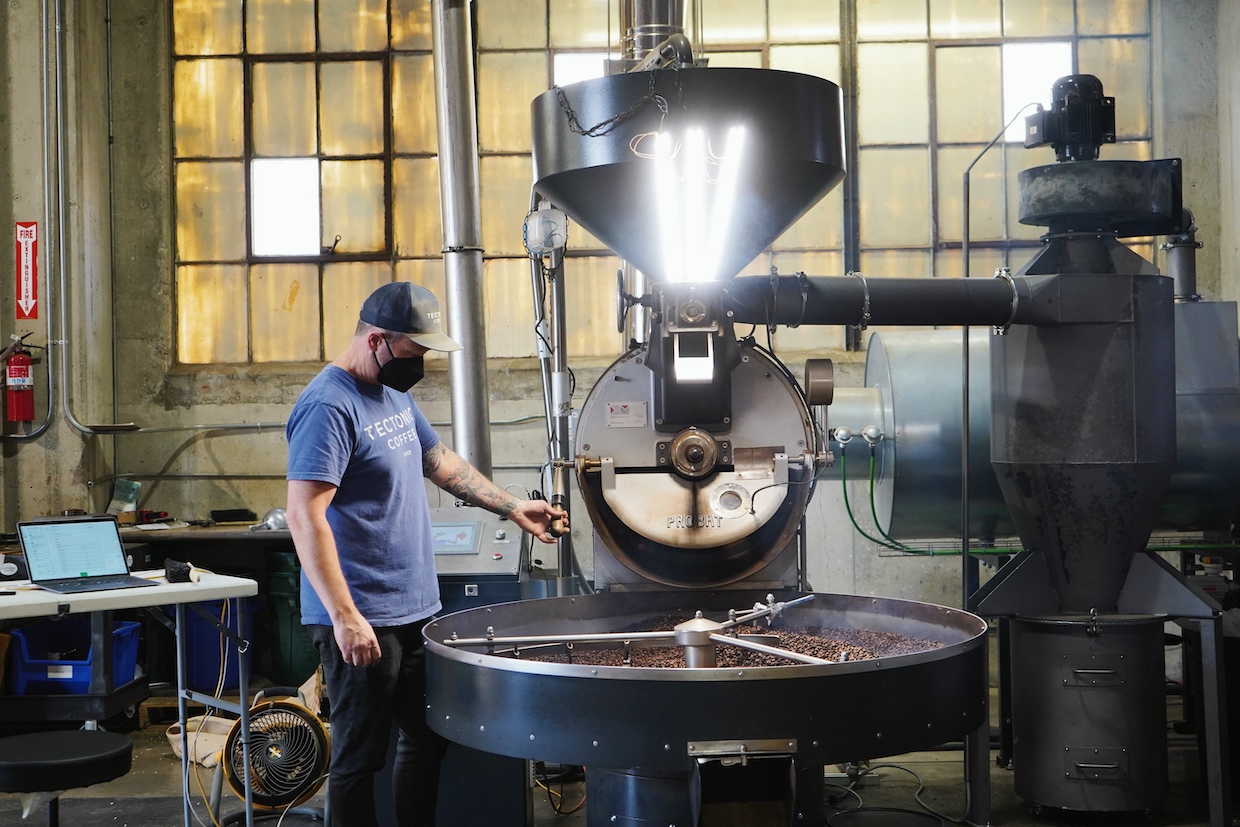
Deaton Pigot at Tectonic Coffee. Courtesy photo.
When universal 10% tariffs on imports were introduced in April as part of sweeping trade policy changes in the United States, I anticipated disruption. What I did not anticipate was the opacity.
As a roaster who has spent the last nine years building a specialty coffee company in Los Angeles — and over 30 years deeply embedded in the global coffee supply chain — I have become accustomed to volatility, including shipping delays, origin shortages and price fluctuations.
However, being left in the dark by importers we trust as partners in transparency was both unexpected and unsettling.
When invoices began arriving from various importers, I meticulously reviewed each, seeking clear evidence of these newly imposed tariffs. These tariffs, introduced as part of Donald Trump’s America First trade policy, began with a universal 10% duty and included potential escalations, notably a looming 30% tariff on Brazilian coffee that has since been enacted at 50%.
Despite my careful monitoring, transparency never materialized. Eventually, I directly inquired with one prominent West Coast importer about the application of tariff-driven pricing. They confirmed that tariff costs would be blended into the overall price, as a cost of goods sold (COGS), an approach that left open questions about timing and transparency.
This is where the frustration began.
Requesting Transparency
When I requested that the importer clearly separate tariff charges to transparently communicate the impact to our customers, they refused. Surprisingly, the response came not from senior leadership, but from the marketing department — a move that felt dismissive. Their rationale was limited bandwidth, claiming their small team lacked resources.
Conversely, another West Coast importer, with whom we’ve partnered for several years, demonstrated proactive transparency by immediately providing detailed tariff documentation. Their invoices itemized percentages and dollar amounts, and included official U.S. Customs documentation outlining tariff applications and associated fees.
Between these two extremes lies a third category: importers who provide tariff breakdowns only retroactively and solely upon request. Such passive transparency falls short of today’s industry needs.
At Tectonic, we’ve chosen to explicitly list tariffs as separate line items on our invoices. Our customers deserve to understand exactly why prices are increasing. This practice is not solely about protecting margins; it is about respecting our customers’ intelligence and enabling them to prepare adequately. Effective transparency demands clear, detailed documentation from our importers from the outset.
Blended Pricing
Blended pricing presents significant operational challenges, especially for blends sourced from various origins, suppliers, and price points. Unexpected tariff costs discovered weeks after invoices arrive disrupt our forecasting and strain customer relationships.
Today, coffee roasters face pressure from both sides. We absorb cost increases from importers while navigating consumer resistance to rising menu prices. When importers opt out of clearly disclosing tariff costs, they effectively force roasters into either silently absorbing these costs or passing them along without justification — actions that erode trust and transparency, essential components of our industry.
In an informal Instagram poll I conducted, a small yet representative sample of an engaged coffee community revealed overwhelming support for upfront transparency. Most roasters I spoke with agreed tariffs should be explicitly disclosed rather than concealed. One roaster, who ships 15 containers a year, reached out to say he has not seen a single invoice with tariffs broken out as a separate line item.
This discussion isn’t intended to name or shame specific companies. Rather, it’s advocating for industry-wide standards of transparency, especially regarding government-imposed tariffs, which should be a foundational expectation.
Roasters deserve clear insight into our costs, just as our customers deserve straightforward explanations for why they are paying more.
Publisher’s note: Daily Coffee News does not engage in sponsored content of any kind. Any statements or opinions expressed belong solely to the authors and do not necessarily reflect the views of Daily Coffee News or its management.
Comments? Questions? News to share? Contact DCN’s editors here. For all the latest coffee industry news, subscribe to the DCN newsletter.
Related Posts
Deaton Pigot
Deaton Pigot is an Australian-American coffee professional and the founder and CEO of Los Angeles-based Tectonic Coffee. A past U.S. barista champion coach, national barista championship judge, international Cup of Excellence judge, and certified Q Grader, Deaton has been involved in the coffee industry for the past 30 years.


Comment